

by Dr. Lori Davis, DNP, FNP-C, Clinical Sexologist & Sex Counselor
If sex hurts, you probably didn’t think to blame your pelvic floor.
Most people don’t even know what their pelvic floor is, let alone that it could be causing pain during sex, burning when they pee, or difficulty having an orgasm.
And here’s the thing that drives me crazy: you’ve probably been told to do Kegels.
Maybe in a yoga class. Maybe by your OB after having a baby. Maybe you read it in a magazine article about “better sex.”
But what if Kegels are making your problem worse?
What if the solution to your pelvic pain isn’t more tightening—it’s learning to relax muscles you didn’t even know you were clenching?
TL;DR
- A tight pelvic floor causes pain — most people only know about weak pelvic floors, but chronic muscle tension is an underrecognized and very common cause of painful sex
- The pelvic floor can be too tight, not just too weak — and Kegels will make it worse, not better
- Symptoms go beyond painful sex — burning when you pee, pain with sitting, difficulty with orgasm, and erectile dysfunction can all point here
- Pelvic floor physical therapists are your best resource — most doctors aren’t trained to assess or treat this
- Learning to relax matters as much as strengthening — breath, stretching, and awareness are the starting point
The Pelvic Floor Needs Better PR
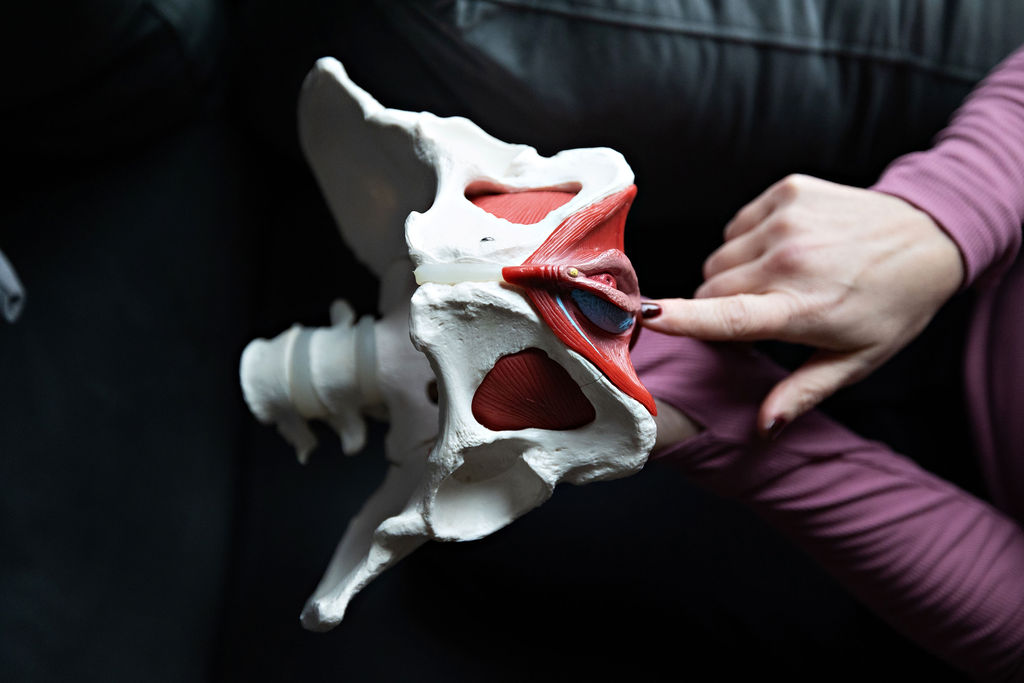
Your pelvic floor is quietly doing essential work all day long. It’s a hammock of 14 muscles, nerves, and connective tissue stretched between your tailbone and pubic bone, supporting your bladder, bowel, uterus, and vagina.
These muscles keep your organs in place. They help you control when you pee and poop. They’re involved in core strength, posture, and movement. And crucially—they’re essential for comfortable, pleasurable sex.
Most people know that weak pelvic floor muscles can cause problems like urinary incontinence. That’s why everyone recommends Kegels.
What they don’t tell you: Pelvic floor muscles can also be too tight. And when that happens, it causes a whole different set of problems—many of which involve pain.
The Problem with “Just Do More Kegels”
Here’s what you need to understand about muscles: they need to be able to both contract and relax.
A healthy muscle moves fluidly—tightening when you need it to, releasing when you don’t.
A healthy pelvic floor is nimble. It can close when you need it closed (like when you sneeze) and open when you need it open (like when you pee, poop, or have penetrative sex).
The problem: Most pelvic floor advice focuses exclusively on tightening.
“Lift your pelvic floor, ladies!”
“Engage your core!”
“Lock your bandha!”
This isn’t necessarily bad advice for everyone. But for people whose pelvic floors are already too tight? It’s like telling someone with chronically tense shoulders to just squeeze harder.
What Goes Wrong: When Muscles Can’t Relax
Pelvic floor muscles are skeletal muscles—the same kind as the muscles in your arms and legs. They’re made of fibers that contract (overlap) and relax (pull apart).
When these muscles are chronically contracted, several things happen:
Trigger points develop. You know that painful knot in your shoulder after hunching over your computer? The same thing can happen in your pelvic floor. Except it’s harder to stretch and massage.
Blood flow gets restricted. Contracted muscles compress blood vessels, reducing oxygen supply. This causes pain.
Nerves get compressed. Nerves run through and around these muscles. Compression causes burning, stabbing, or aching pain.
Here’s what makes pelvic floor muscles particularly prone to dysfunction: Unlike your shoulder muscles, which are connected to movable joints, your pelvic floor muscles attach to the immovable bones of your pelvis.
You can’t move your pelvis to release tight pelvic floor muscles the way you can roll your shoulders or move your leg to stretch a tight hip. This makes these muscles especially vulnerable to chronic contraction.
How Pelvic Floor Dysfunction Starts
There are many ways pelvic floor muscles become dysfunctional:
- Direct trauma: Falling on your tailbone, childbirth
- Intense core exercise: Constant activation without release
- Injuries to the leg or hip: These muscles are interconnected—a change in your gait can affect the pelvic floor
- Surgery: Hysterectomy, prostatectomy
- Chronic constipation and straining
- Endometriosis: Inflammation can cause muscle overactivation
- Hormonal changes: Menopause-related pain can trigger protective muscle contraction.
But here’s the truth: we don’t always know how it started.
Some people naturally hold tension in their pelvic floor, the way others carry stress in their shoulders. Maybe you learned to stabilize your core by lifting your pelvic floor as you learned to walk. Maybe you unconsciously clench when you’re stressed.
The vicious cycle: Anything that causes pain in the pelvis can lead to pelvic floor dysfunction—and then the dysfunction causes more pain.
For example, if penetrative sex hurts, your body tries to protect you by contracting the pelvic floor to prevent penetration. But the contraction itself can be the source of the pain. So now you have: pain triggers contraction, which triggers more pain, which triggers more contraction.
Symptoms of Pelvic Floor Dysfunction
Most people know the symptoms of a weak pelvic floor:
- Urinary incontinence
- Difficulty controlling bowel movements
- Pelvic organ prolapse
What you probably don’t know: A tight or dysfunctional pelvic floor causes an entirely different set of symptoms.
If you have a vulva, pelvic floor dysfunction can cause:
- Pain anywhere in the vulva, vagina, clitoris, perineum, or anus
- Burning, itching, or stabbing sensations in the genitals
- Pain at the vaginal opening during penetration
- Urinary discomfort or frequency (even without a UTI)
- Pain with sitting
- Pain with or after orgasm, or inability to orgasm
If you have a penis, it can cause:
- Pain in the penis, scrotum, perineum, or anus
- Erectile dysfunction
- Pain after ejaculation
- Pain with sitting
Bottom line: If you have unexplained pelvic pain—especially pain with sex—pelvic floor dysfunction should be one of the first things you investigate. For comprehensive guidance on addressing painful sex after menopause, see 5 Things You Can Do to Have Pain-Free Sex After Menopause.
Hurts when you pee, and there’s no UTI? It could be your pelvic floor.
Hurts when you sit? It could be your pelvic floor.
Hurts when you have sex? Definitely could be your pelvic floor.
Understanding Pain: It’s Not Just About Tight Muscles
Here’s something important: Pain doesn’t actually originate in your body. It originates in your brain.
Your brain creates pain when it perceives danger to your body. But the systems that monitor for danger can become overly sensitive—perceiving threats when there aren’t any.
This is why sometimes there’s an initial injury (like childbirth or a fall), but then the pain persists long after the tissue has healed. The nervous system has become sensitized, and the brain continues to create pain even when there’s no ongoing tissue damage.
This doesn’t mean the pain isn’t real. It IS real. But understanding that pain is a danger signal from the brain (not just a measure of tissue damage) changes how we approach treatment.
What to Do If You Suspect Pelvic Floor Trouble
First: You are not alone, and you are not broken.
An estimated 20% of women experience pelvic pain at some point in their lives, and about 2 million men have chronic pelvic pain. This can affect anyone with a pelvic floor, regardless of gender.
Step 1: Get evaluated
You need someone who can do a pelvic floor muscle exam. This might be:
- Your primary care doctor (if they’re trained in pelvic floor assessment)
- Your gynecologist or urologist
- A certified sex counselor who is also a licensed medical provider
- A pelvic floor physical therapist
The caveat: Not all gynecologists and primary care doctors are trained in pelvic floor muscle assessment. This is a gap in medical education that can leave you without answers.
If you can find a licensed medical provider who is also a certified sex counselor, that’s ideal—you’ll get a comprehensive evaluation for all possible causes of your symptoms.
But honestly? Pelvic floor physical therapists are your best resource.
Step 2: Understand what pelvic floor PT involves
A pelvic floor physical therapist is specifically trained to assess and treat the musculoskeletal system of the pelvis.
What to expect:
- Internal examination (usually a gloved, lubricated finger inserted vaginally or anally to assess muscle tone and trigger points)
- Treatment may also involve internal work to release trigger points.
- External exercises and strategies to support pelvic floor function
I know—internal exams and treatment aren’t anyone’s idea of fun. Good pelvic floor PTs understand this and will support you throughout the process.
And if you’re not ready for internal work? A skilled pelvic PT can still offer valuable strategies.
Finding a qualified provider:
Look for a pelvic floor PT who:
- Is certified in pelvic floor therapy
- Specializes in pelvic floor work (not just a general PT who does some pelvic work)
Resources:
- International Pelvic Pain Society
- International Society for the Study of Women’s Sexual Health
- American Physical Therapy Association – Pelvic Health
Pelvic Floor Exercises: Not Just Kegels
If you’re having pelvic pain, Kegels are probably not the answer. More tightening will make things worse.
What you need is to learn to relax your pelvic floor.
Start with awareness: Where is your pelvic floor right now? Is it tight? Relaxed? This might seem like a strange question, but stay with it.
- Try this: Bear down like you’re having a bowel movement. This stretches and relaxes the pelvic floor. Squeeze gently, as if stopping the flow of urine. This contracts the pelvic floor. Notice the difference. Gentle awareness of contraction and release helps you connect to these muscles.
Use your breath: Your pelvic floor moves with your diaphragm when you breathe.
- Try this: Take a deep breath into your belly. Watch your belly rise and fall. Notice how the breath creates gentle downward expansion into the pelvic floor. Belly breathing is excellent for your pelvic floor, your nervous system, and your overall well-being.
Stretch and Release: Both of these positions gently stretch and release the pelvic floor.
- Child’s pose (balasana): Knees wide, forehead to floor, hips pressing back
- Malasana (deep squat): Feet wide, heels down if possible
Before sex: If tightness makes sex painful, use these stretches and breathing exercises beforehand to encourage pelvic floor relaxation.
- Explore on your own: Place your hand against your vulva and press down into your pelvic floor, then release. Feel the subtle movement? Insert a finger vaginally or anally and contract/release the pelvic floor. Can you feel it? Is there pain in specific areas? This exploration may bring up emotions. That’s normal. Be gentle with yourself.
Your Pelvic Floor Is More Than Just Muscles
In many ancient traditions, this area—your physical core, your center of gravity—is considered energetically significant.
It’s called the hara in Japanese traditions, the chi center in Chinese medicine, the seat of kundalini energy in yogic philosophy. In the chakra system, this is the root chakra—responsible for stability, grounding, safety, and security.
I’m not suggesting that pelvic floor dysfunction is purely energetic. The muscles, nerves, and pain are very real.
But this area connects us to fundamental human experiences: elimination, sexuality, birth, and physical stability. It makes sense that it holds emotional and psychological significance as well.
This is your body’s foundation. When it’s not functioning well, you may feel ungrounded, unsafe, or disconnected from your own body.
So give your pelvic floor some attention. So much compassion.
You deserve it.
Working With Me
If you’re dealing with painful sex and haven’t gotten clear answers, the pelvic floor is often part of the picture. As a DNP and AASECT Certified Sex Counselor, I can evaluate what’s contributing to your symptoms and help you figure out next steps. In person in Ithaca or virtually in NY or VT.
Learn more about working together here. Book a first appointment here.
Dr. Lori Davis is a Doctor of Nursing Practice, board-certified Family Nurse Practitioner, and AASECT Certified Sex Counselor specializing in sex and intimacy.
Further Reading
The Knot: Why Your Body Shuts Down When Sex Comes Up
The Problem Everyone Gets Wrong about Mismatched Desire
Why Don’t I Want Sex Anymore: Understanding Responsive Desire
